Table of contents
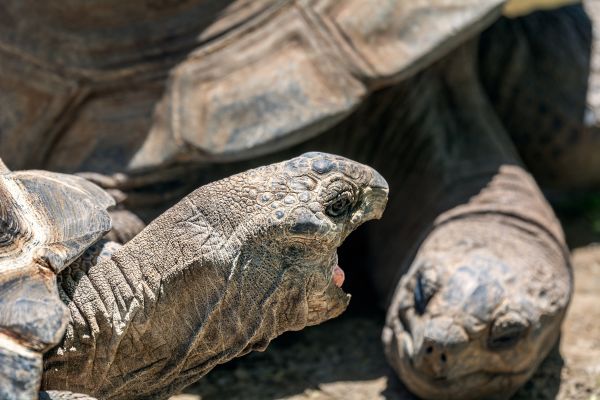
It is a slow process of getting back what was taken from them. The giants have returned to Floreana through a quiet and methodical approach instead of a loud celebration. Their disappearance has lasted for more than 180 years while their absence continues to affect the volcanic hills of Galapagos island. The island became home to 158 juvenile tortoises which moved at a slow pace while ignoring the significance of the occasion during their release in February 2026. The island used to experience this event during the mid-1800s although it now represents a positive shift from disappearance to species restoration. A group of 158 juvenile tortoises were released onto the island during February 2026 when they moved slowly through this important event which people used to witness during the 1800s but now symbolizes species recovery.
And this, mind you, isn't just for symbolic sentimentality.
The Giants in the Ecosystem
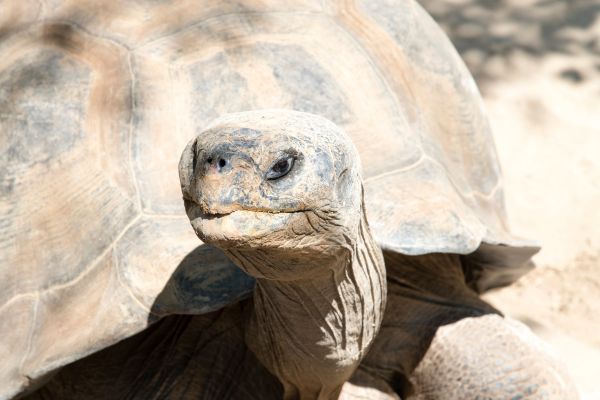
We need to discuss tortoises by examining their ecological role instead of using scientific terminology. The animals exist as large reptiles which bear calm expressions on their faces. The environment they live in receives construction from their work as engineers and architects. Their continuous feeding practice creates plant groupings which resemble the work of a slow-moving lawn mower. The creatures make their way through thick plant growth which creates passages for other animals to use. Their seed distribution practices spread across the land to enrich the earth while creating new plant species.
A tortoise population has the power to change the entire landscape of an island through their activities which resemble how rivers create valleys.
The Return of the Tortoises
The tortoises that made their way back to Floreana didn't just appear out of thin air. The team organized a strategic return which developed from genetic studies and biosecurity measures and extended waiting periods. These young animals bear the genetic inheritance of the Floreana tortoise species which vanished from existence to combat their local population collapse.
These tortoises needed more than basic relocation because their introduction process demanded additional work. The conservation team needed to concentrate on biosecurity measures and invasive species management because these areas received minimal attention. Scientists needed to establish the island environment through a process which resembled preparing a space for a new infant. The protection of hatchlings required people to handle invasive rat and feral cat threats which allowed the young birds to develop their safety. The basic tough work which went unrecognized enabled the tortoises to come back to life.
Impact on Floreana’s Community and UNESCO Status
Floreana is not an uninhabited island. Today it supports a small community of roughly 120 to 200 residents who live in close relationship with the same fragile environment that sustains the island’s native wildlife. Invasive species have long disrupted local ecosystems and agriculture, creating challenges for both conservation and the island’s residents. In this context, the return of giant tortoises represents more than an ecological milestone — it also contributes to the long-term restoration of the island’s natural balance.
Floreana forms part of the Galápagos Islands, a destination recognized worldwide for its extraordinary biodiversity. The archipelago was designated a UNESCO Natural World Heritage Site in 1978, acknowledged for its Outstanding Universal Value. This designation reflects the global importance of preserving the islands’ ecosystems and requires ongoing conservation, scientific monitoring, and responsible management. For visitors, the Galápagos are not simply a tropical getaway, but one of the planet’s most unique natural environments — a living laboratory of evolution found nowhere else on Earth.
Explore the Western and Southern Galapagos by Luxury Yacht
For travelers inspired by the conservation story of Floreana and the extraordinary wildlife of the Galápagos, one of the best ways to experience the archipelago is through a multi-day expedition cruise. Sailing aboard the Natural Paradise Yacht’s Deluxe Western & Southern Expedition, this eight-day journey explores some of the most remote and biologically rich islands in the western and southern Galápagos.
This itinerary combines world-class wildlife viewing with comfortable small-ship cruising. Guests navigate among dramatic lava coastlines, secluded bays, and pristine islands such as Fernandina, Isabela, Floreana, and Española, guided by expert naturalists who interpret the remarkable biodiversity that made the Galápagos famous. Along the way, opportunities for snorkeling, dinghy excursions, and coastal walks reveal the islands from both land and sea.
Highlights of this expedition include:
-
Visiting Fernandina Island, one of the most pristine ecosystems in the world, home to marine iguanas and flightless cormorants
-
Snorkeling in the rich waters of Vicente Roca Point and other premier sites of the Galápagos Marine Reserve
-
Exploring Floreana Island, known for its historic Post Office Bay and flamingo-filled lagoons
-
Observing waved albatrosses and seabird colonies on Española Island
-
Cruising aboard a high-end motor yacht with panoramic cabins, gourmet dining, and expert naturalist guides
Discover the full itinerary and experience the Galápagos from a unique perspective aboard the Natural Paradise Yacht.
Frequently Asked Questions
Are giant tortoises native to Floreana Island?
Yes. Floreana historically supported a large giant tortoise population, but the local lineage was driven to extinction on the island by the mid-1800s due to exploitation and introduced threats.
How many tortoises were released on Floreana in 2026?
158 juvenile tortoises were released in February 2026 as part of the Floreana Ecological Restoration Project.
Why is the tortoise return considered a major conservation milestone?
Because giant tortoises function as ecosystem engineers—restoring grazing patterns, seed dispersal, and habitat structure—while signaling that biosecurity and restoration efforts have reached a level where reintroductions can succeed.
Can you visit Floreana on a Galapagos cruise?
Yes. Select itineraries include Floreana landings and nearby islets, often combining interpretive walks (history and ecology) with snorkeling sites such as Champion Islet.
The return of the tortoises to Floreana isn't just another conservation headline. The narrative describes how science and determination and local support succeeded in restoring a species which returned to its native habitat. The story presents a concrete form of hope which stands on four strong legs to experience the initial rainfall after it begins to fall. We travelers connect with this narrative because we carry out essential activities which help shape the entire story. Our responsibility is to ensure those first slow footsteps become a lasting path forward.